Turn your city
into a game.

UrbanRadar motivates young residents to walk, discover local places and return to them — while giving the city and local businesses a new channel for engagement.

Proposal: first local launch

Challenge

Young residents live in the city,
but rarely discover it

  • 01The phone already has their attention. The city needs a reason for that attention to lead outdoors.
  • 02Local places compete with global platforms. Parks, landmarks, cultural venues and small businesses are easy to overlook.
  • 03City communication is mostly passive. Information exists, but it rarely becomes a reason to visit a place today.
UrbanRadar connects the digital habits young people already have with real movement through their own city.
Solution

A city game played on real streets

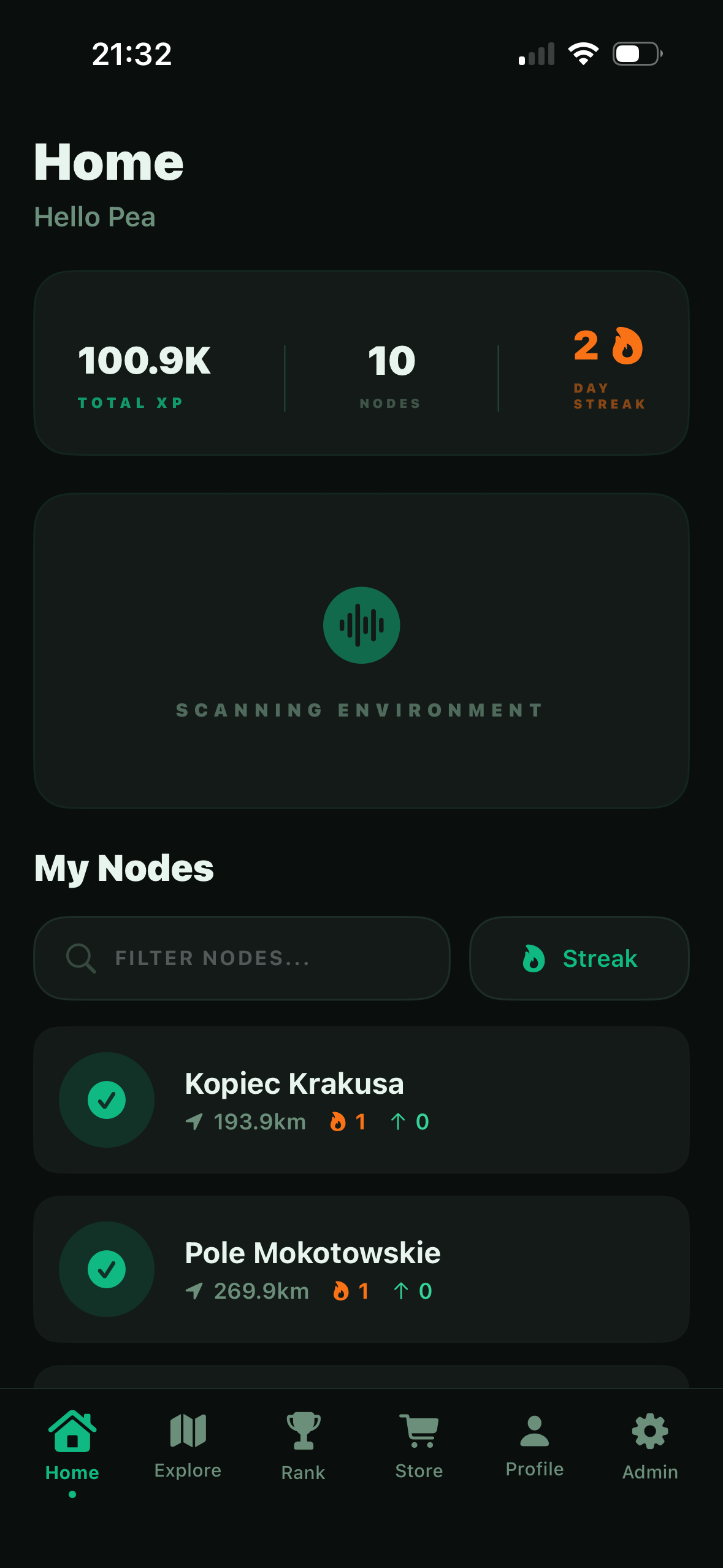
The user opens the app, sees nearby places, walks to one and claims it. Each visit earns XP, builds a streak and reveals more of the city.

  • Discover — radar shows parks, landmarks, venues and business spots nearby
  • Walk — the user must physically reach the location
  • Claim — one tap confirms the visit and awards XP
  • Return — streaks, rankings and rewards encourage regular activity
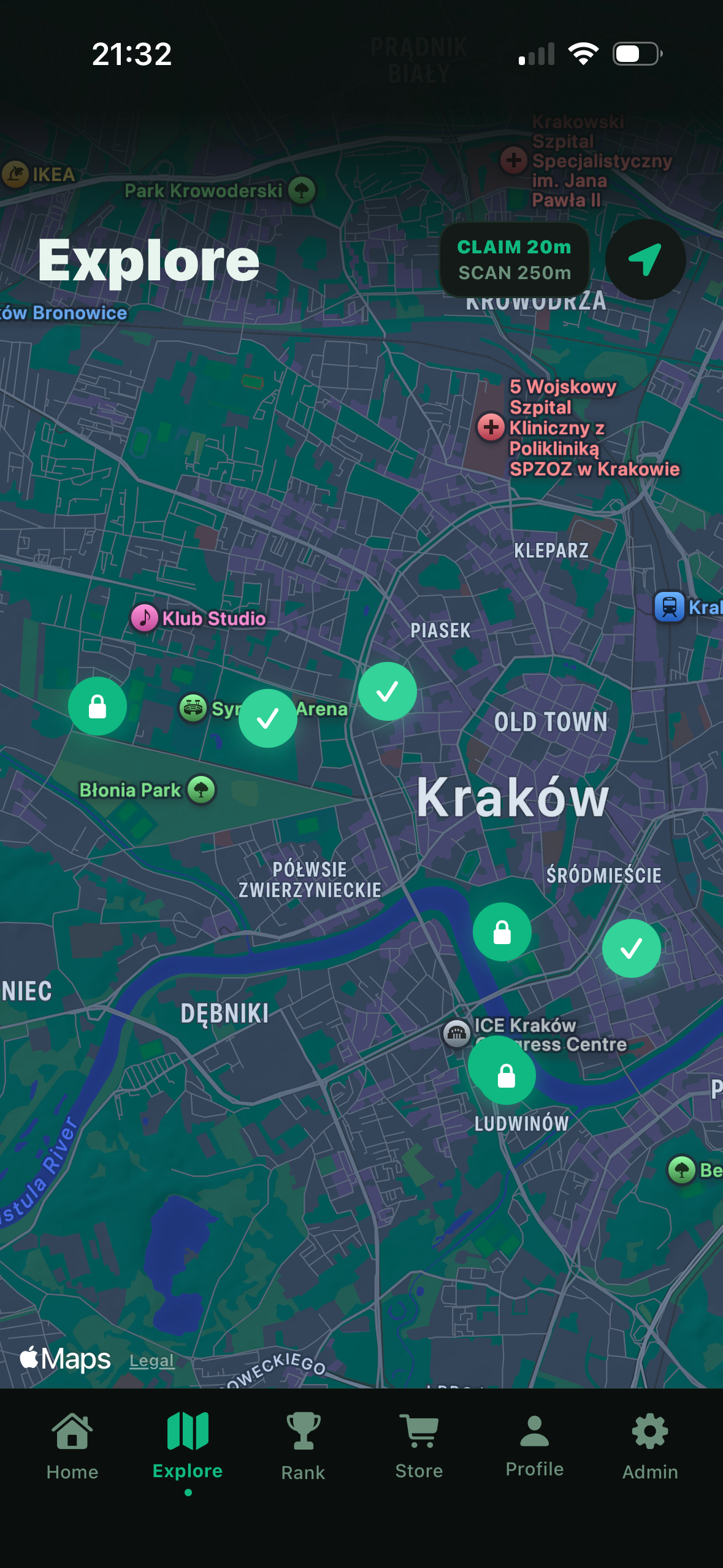
Explore screen
Experience

Four actions. One reason to go outside.

01 Scan

See interesting places within walking distance.

02 Walk

Reach the place physically — no remote claiming.

03 Claim

Confirm the visit and receive XP instantly.

04 Return

Build a streak, climb the ranking and unlock rewards.

Retention

Progress turns a walk into a habit

UrbanRadar connects small motivations into one return loop: choose a goal, go outside, see progress and come back for the next challenge.

Daily & weekly quests

Clear targets turn activity into achievable sessions with rewards after completion.

Streaks with context

A calendar shows consistency; streak protection helps preserve momentum.

XP & rankings

Every verified action builds visible individual and local progress.

Community voting

Residents help surface worthwhile places instead of consuming a fixed map.

Themes & useful boosts

Earned progress becomes personalization and limited-use items.

A personal city record

Claimed nodes and visit history make exploration cumulative.

Social motivation

The city becomes a shared challenge

  • Friends and follows. Residents build a local network around real-world activity.
  • Public profiles. XP, streaks, visited places and supporter status make progress recognizable.
  • Town identity. Users choose their town and contribute to local rankings.
The social layer rewards participation and identity; it does not replace the real-world experience.
Home screen
Value for the city

A new way to activate
local places

  • More movement. The game rewards reaching places on foot, not staying on the screen.
  • Greater awareness. Residents discover parks, landmarks, cultural venues and less obvious parts of the city.
  • Direct engagement. The city can promote selected locations, events and seasonal challenges inside the experience.
  • Measurable visits. The city can see which locations attract attention and which activities create real movement.
Engagement

Why people would return

  • Every walk has a purpose. Nearby places become clear, reachable goals.
  • Progress is visible. XP, streaks and rankings make activity feel cumulative.
  • The city keeps changing. New spots, events and challenges prevent the experience from becoming static.
  • Local rewards matter. Benefits connected to real places create a reason to return.
Value for businesses

From discovery to a
real visit

  • Apply for or claim a venue. A business can verify its relationship to a place and request a managed presence.
  • UrbanCard is optional. The business defines a benefit; staff scan the customer's code to validate redemption.
  • No reward required. A business can add only the location, or add UrbanCard later as the recommended growth path.
The business does not need a separate deal with the city. It applies for its own spot and can optionally activate UrbanCard rewards.
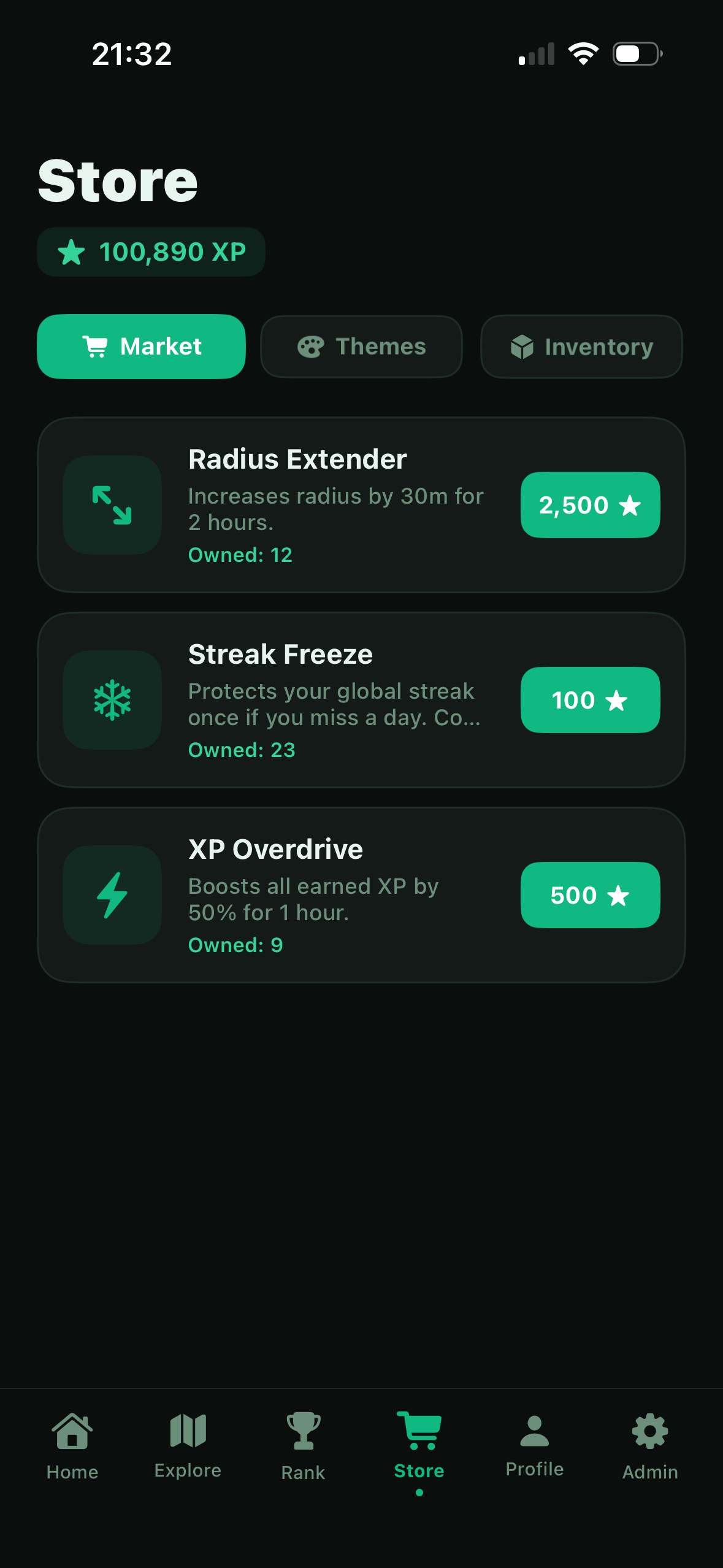
Store screen
Business workspace

Businesses can operate their presence themselves

Join and verify

Apply for a new venue or claim an existing one through ownership verification.

Configure the experience

Manage nodes, UrbanCard rewards and optional sponsored visibility from one workspace.

Run day to day

Invite workers, give them scan-only access, validate codes and review activity without sharing owner credentials.

Self-service lets local participation grow without requiring the city to manually operate every business relationship.
Local ecosystem

One platform, three participants

Local businesses

Apply to add their own spots. UrbanCard rewards are optional, not required.

Residents

Explore, move, compete and discover places they might otherwise pass by.

The city defines public value. Businesses join through applications. Residents create real movement.
Launch control

Guide the network without watching individual movements

Adminnetwork configuration
Modreview & moderation
QRcontrolled check-ins
Rolesleast-privilege access

What can be reported

Aggregated activity, verified visits, returning users, popular locations, completed challenges and UrbanCard scans—without unnecessary personal route histories.

Product status

The product works; launch readiness is now about configuration

Launch configuration

Select first locations and campaign, validate launch analytics, onboard partners and complete production credentials and App Store product setup.

Expansion path

Seasonal programs, more districts, richer sponsorship analytics and Android consumer purchasing can follow evidence from the first launch.

Roadmap

From first launch to a city platform

Stage 1 — Prepare

Select public locations, launch area and first campaign theme.

Stage 2 — Launch

Open the first version to residents and support it with local communication.

Stage 3 — Evaluate

Review usage, visits, retention, popular locations and UrbanCard scans.

Stage 4 — Expand

Add seasonal challenges, more districts, cultural programs and more business applications.

Let's launch UrbanRadar
in our city first.

Thirty city locations, several business locations and eight weeks of measurable activity — without changes to physical infrastructure.

Next step: appoint a city contact and choose the first launch area.

urbnradar.com